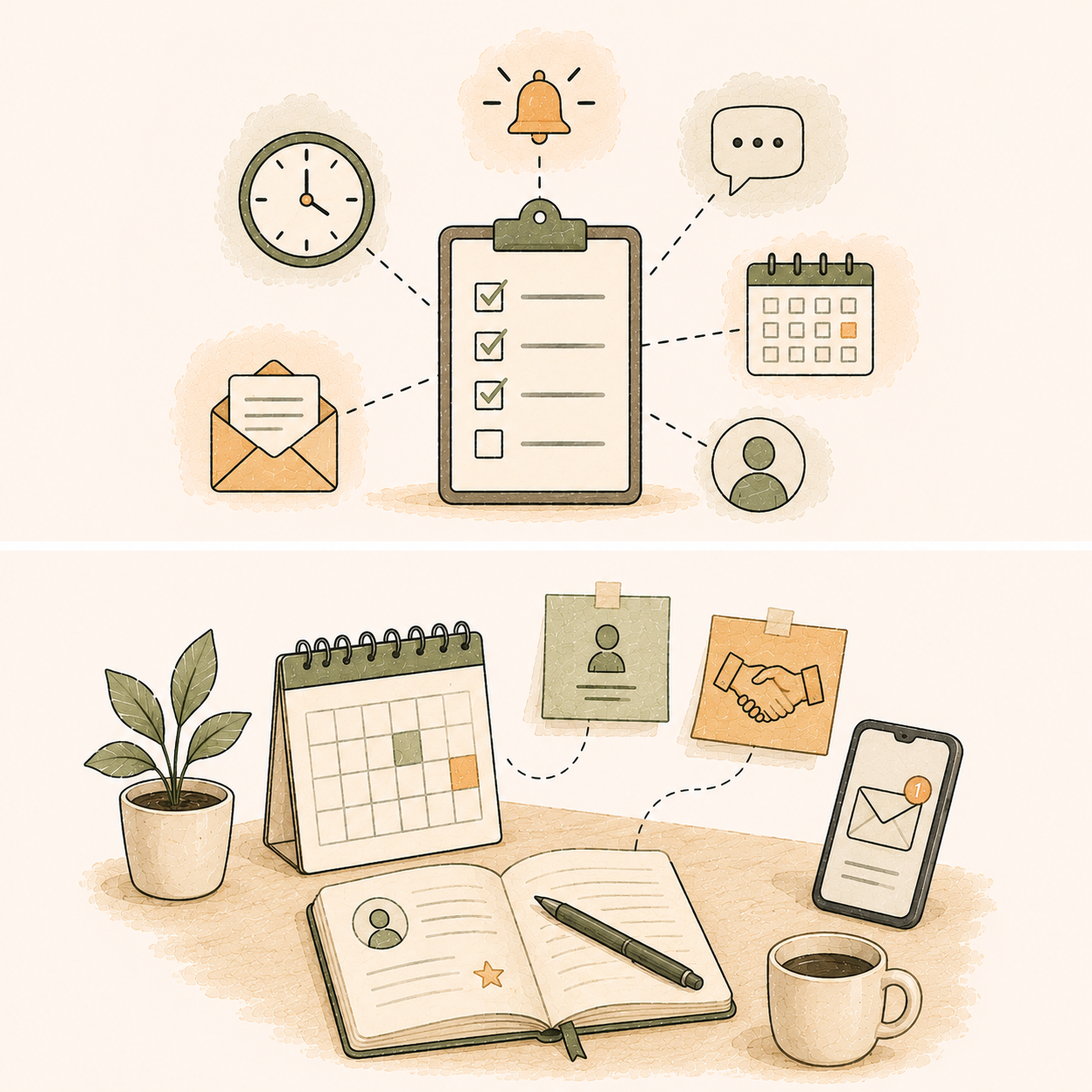
Professional relationships rarely end with a clear goodbye. Most fade quietly through missed follow-ups, crowded inboxes, and conversations that never restart. That's why follow-up reminders matter far beyond simple email management.
Strong networks depend on timing, relevance, and continuity. That's why Goodword approaches relationship management as an ongoing practice of maintaining trust, context, and momentum rather than treating networking as a collection exercise.
The challenge is not sending more reminders, but maintaining professional relationships in a way that feels personal, even as your network grows. In this guide, you'll learn how better timing, thoughtful habits, and the right context help preserve social capital before valuable connections fade away.
Most professional relationships fade because neither person follows up consistently enough to stay top of mind. That matters because opportunities rarely come from strangers. They usually come from existing relationships, dormant ties, and weak connections that regain momentum at the right moment.
A great reminder email does three things at once: it gives context, keeps the tone respectful, and tells the reader exactly what to do next.
Getting all three right separates a friendly reminder email from one that gets ignored or irritates the recipient.
Every reminder email signals something about how you manage relationships. Thoughtful follow-up shows reliability, attention, and consistency, which are all traits people remember when opportunities appear.
The strongest Follow-Up reminders usually include five core elements:
Keep your message short. Three to five sentences in the body usually work best. If your reminder email requires scrolling, it's probably too long.
Tone determines whether a follow-up strengthens trust or creates friction. People respond better when reminders feel considerate and relevant instead of transactional.
Professionals often underestimate how much emotional tone affects relationship maintenance. A respectful message makes it easier for someone to re-engage, even after weeks of silence.
Assume positive intent. Instead of saying, "I still haven't heard from you," try, "I wanted to float this back to the top of your inbox." That small shift removes guilt and makes the reader more likely to reply.
Avoid words like "urgent" or "ASAP" unless the situation truly calls for them. When people see urgency too often, they start ignoring it.
Use phrases like "when you get a chance" or "at your earliest convenience" for most situations. One useful tactic from real outreach campaigns is validating the person's busy schedule. A line like "I know things are hectic right now" can lower defensiveness and increase reply rates.
Timing shapes how people interpret your intent. Well-timed Follow-Up reminders feel thoughtful and professional, while poorly timed outreach can feel reactive or self-serving.
The best networkers treat follow-up as relationship maintenance, not inbox management. They understand that consistency matters more than intensity.
Send them too soon, and you'll seem impatient. Wait too long, and the recipient may forget the original message. The right cadence depends on the type of follow-up and the time sensitivity of the request.
Research on weak ties shows that casual professional relationships often carry the most unexpected opportunities. The challenge is that weak ties disappear quickly without occasional interaction.
A reliable follow-up sequence creates light-touch continuity without overwhelming the recipient:
The best days to send Follow-Up reminders are Tuesday, Wednesday, and Thursday. Aim for mid-morning or early afternoon, ideally between 10 AM and 2 PM in the recipient's time zone. Skip Monday mornings and Friday afternoons when possible, as inbox fatigue is real.
The right timing always depends on context — a reconnection with a dormant contact calls for different spacing than a time-sensitive ask — but the underlying principle stays the same: consistent, well-spaced touchpoints feel thoughtful rather than pushy."
If you've sent three follow-ups with no response, it's probably time to send a break-up email. This message signals that you'll stop reaching out and puts the ball in their court.
Keep it short and respectful. Something like, "It seems like this is not a priority right now. I'll close this out on my end, but feel free to reach out if anything changes," works well.
Break-up emails often trigger a response because they create a sense of closure. In real sales outreach, these messages can generate reply rates of 15-20 percent.
Having a couple of ready-made templates helps you follow through consistently without overthinking the wording. Here are two you can adapt for common relationship follow-up situations.
Subject: Checking in, it's been a while
Hi [First Name],
I was thinking about our conversation at [Event/Context] and wanted to reach out. I've been following [something relevant to them — their work, a project, a company milestone] and thought of you.
No agenda here, just wanted to stay in touch and see how things are going on your end.
[Your Name]
Subject: Great meeting you at [Event/Context]
Hi [First Name],
Really enjoyed our conversation about [specific topic]. I wanted to follow up while it was still fresh [one sentence on why the connection felt relevant or what you'd like to explore].
Would you be open to a quick call sometime in the next few weeks?
[Your Name]
Most professionals already know they should stay in touch more consistently. The real challenge is remembering who matters, when to reach out, and what context makes the conversation relevant.
A strong Follow-Up system reduces mental overload while helping you maintain professional relationships over time. The goal is not to replace human connection with automation, but to protect relationships from being forgotten.
CRM reminders work best when they support consistency rather than replace thoughtfulness. For most professionals, automation is useful for the first touchpoint or two — keeping you on schedule when life gets busy — but personal outreach is what makes follow-up meaningful beyond that.
A practical approach is to automate your first two follow-up reminders, then flag non-responses for manual outreach. That balance saves time while still giving high-value contacts the personal attention that actually builds relationships.
Every thoughtful follow-up strengthens familiarity, reliability, and trust. Over time, those small interactions compound into social capital that creates introductions, referrals, and opportunities.
Follow-Up reminders matter because they keep professional relationships active long enough for trust to build. Most professionals already have the right contacts, they just lose touch before the relationship reaches the point where it naturally creates value.
The difference between a strong network and a forgotten one is rarely about how many people you know. It's about who still thinks of you when something relevant comes up. Consistent, thoughtful follow-up is what keeps you in that category.
That doesn't require a complex system or a high volume of outreach. It requires showing up regularly enough that relationships don't go cold, and personally enough that people actually want to respond.
Now you know that most opportunities come from existing relationships that stay active long enough for trust, familiarity, and relevance to compound over time. Consistent Follow-Up reminders help prevent valuable connections from disappearing between busy schedules and crowded inboxes.
Set recurring reminders for people you want to keep in touch with, track key context after conversations, and create simple habits to reconnect before relationships go dormant. Small actions repeated consistently build more social capital than occasional bursts of networking activity.
Goodword helps professionals maintain meaningful relationships with better context, timing, and consistency. Start with a simple follow-up system that reminds you to reconnect with a few important contacts each week because the relationships you maintain consistently are often the ones that create future opportunities.
Follow-Up reminders help professionals stay visible without relying on memory alone. Consistent outreach keeps conversations active, reinforces trust, and prevents important relationships from fading after the initial interaction. Over time, those small touchpoints strengthen social capital and make future opportunities more likely.
The best Follow-Up system is one that makes relationship maintenance consistent and manageable. Most professionals benefit from setting recurring reminders, organizing contacts by priority, and tracking personal context from previous conversations. A simple system you actually use will outperform a complicated process that becomes difficult to maintain.
Weak ties often introduce new opportunities, perspectives, and connections that close contacts cannot provide. The challenge is that these relationships fade quickly without occasional follow-up. Thoughtful reminders help maintain light-touch communication so relationships stay active without requiring constant interaction.
Many professionals use CRM reminders, calendar systems, email workflows, and networking tools to stay organized. The best tools help track timing, conversation history, and relationship context in one place. Technology works best when it supports thoughtful communication instead of automating every interaction.
The strongest Follow-Up reminders stay short, specific, and easy to respond to. Good timing, a clear next step, and personal context make messages feel helpful instead of transactional. Most professionals see better results when they focus on consistency and relevance instead of sending frequent reminders.
The right timing depends on the relationship and situation, but consistency matters more than frequency. Strong professional networks usually rely on periodic check-ins that feel natural and relevant instead of constant outreach. A regular Follow-Up system helps maintain momentum without overwhelming people.
Automation works best when it supports memory and consistency instead of replacing genuine communication. Automated reminders can help professionals remember when to reconnect, but personal context is what makes follow-up meaningful. If you want to maintain professional relationships at scale, start by creating systems that help you follow through thoughtfully rather than simply sending more messages.

.svg)





.png)