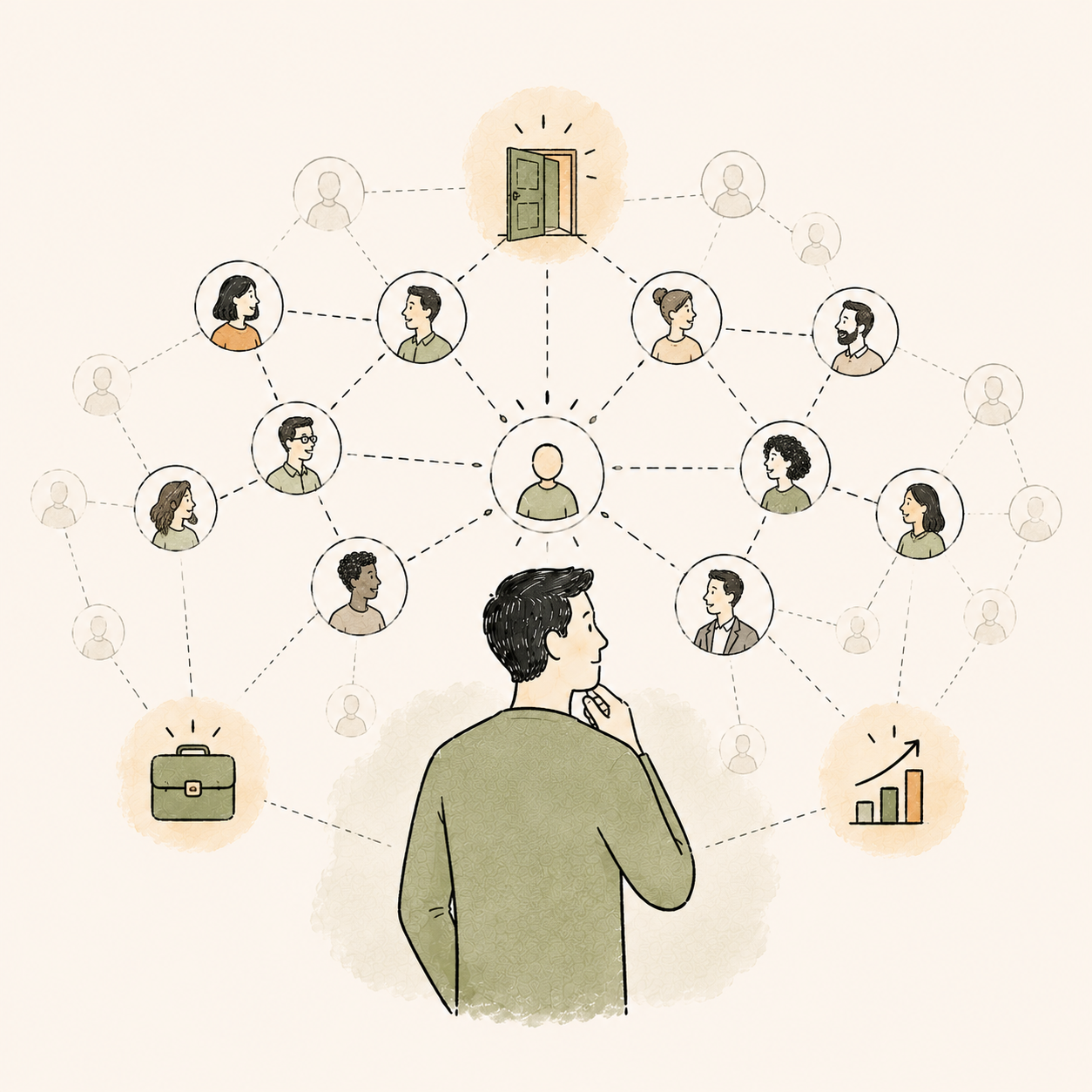
Most people think networking connections are limited to the handful of people they speak to every week. They focus on active conversations while ignoring the much larger layer of relationships sitting quietly in the background. That blind spot causes professionals to underestimate how much opportunity already exists inside their network.
Goodword approaches relationship-building differently. Instead of treating networking as constant outreach, it focuses on maintaining personal context over time so that weak ties, dormant relationships, and overlooked connections stay meaningful rather than fading into memory.
This article explains why hidden opportunities often come from weak ties, dormant relationships, and overlooked networking connections. Once you understand how opportunity moves through a professional network, you start seeing your relationships as long-term social capital instead of simple contacts.
Most people rely heavily on close professional relationships because those connections feel strongest. They trust the people they speak to often and assume those relationships hold the most opportunity.
But inner circles tend to share the same information. Your closest contacts often work in similar environments, consume the same ideas, and hear about the same openings. Strong ties create emotional support and trust, but weak ties create discovery.
This is why career-changing opportunities often arrive from unexpected directions. The person who introduces you to a new industry, role, or client is rarely the person you talk to every day.
Weak ties are the lighter networking connections that exist outside your daily routines. Former teammates, loose collaborators, alumni, old managers, and occasional industry acquaintances all fall into this category.
These relationships matter because they bridge different worlds. Someone distant from your immediate circle has access to information, conversations, and opportunities your closest contacts may never encounter.
This is the core finding behind sociologist Mark Granovetter's landmark research on weak ties; the idea that distance creates informational diversity. The people furthest from your daily life often bring the newest opportunities into it.
Professionals usually remember relationships emotionally instead of structurally. They recall the people they speak to most frequently while overlooking everyone sitting further out in the network.
But your professional network includes far more than active conversations. It includes:
Many of these people would likely respond positively if you reached out today. Relationships decay far more slowly than most professionals assume.
People spend enormous energy trying to make new contacts while ignoring the trust already sitting inside dormant relationships. That instinct feels productive, but it often creates unnecessary friction.
A dormant tie already contains context. You share history, familiarity, or mutual recognition. Even a small amount of prior trust changes how quickly conversations restart.
This is why reconnecting often outperforms cold outreach. The relationship may be inactive, but the social foundation still exists.
Most professionals do not struggle to meet people. Work, events, online communities, and introductions constantly create new connections. The harder challenge is maintaining professional relationships once the initial moment passes.
Networks rarely disappear through conflict. They disappear through passive neglect. People assume they will remember to follow up later, but as relationships scale, important context fades first.
You lose track of who changed industries, moved cities, or started something new. Eventually, the relationship becomes difficult to restart because the context is gone.
The strongest hidden opportunities often come from dormant relationships that already contain trust, context, and familiarity. Goodword helps you maintain those connections before timing makes them valuable again.
Most follow-up advice fails because it treats relationships as reminders rather than human experiences. Generic check-ins feel forgettable because they signal process rather than attention.
Specificity creates emotional continuity. Remembering that someone was nervous about a promotion matters more than remembering their title. Following up on a personal milestone creates more trust than sending another surface-level networking message.
The strongest professional relationships are built through accumulated moments of relevance. People remember who paid attention when details could have easily been forgotten.
The most effective networkers are rarely the most aggressive. They are usually the people who create small moments of usefulness consistently over long periods.
A thoughtful introduction. A relevant article. A quick recommendation. A five-minute favor that solves a frustrating problem. These actions seem minor individually, but they quietly shape how people remember you.
This is what separates intentional relationship-building from transactional networking. The goal is not constant visibility. The goal is to become someone associated with relevance, generosity, and trust.
Professional opportunities usually appear long before they become public. A hiring manager asks around quietly before posting a role. A founder looks for recommendations before making introductions. A client seeks trusted referrals before beginning a search.
Most of these conversations happen inside networks, not applications. That is why hidden opportunities often belong to the people who stay lightly connected across many different relationship layers.
A weak tie may mention your name in a room you never entered. A dormant relationship may reopen at exactly the right moment. The opportunity itself often looks random from the outside, even though the relationship path behind it was predictable.
As communication becomes increasingly automated, generic outreach becomes easier to recognize. People can instantly feel the difference between thoughtful attention and mass-produced interaction.
This changes the economics of professional relationships. Memory, trust, and context become more valuable because they are becoming more scarce.
The professionals who stand out over the next decade will not necessarily be the loudest networkers. They will be the people who maintain relationships deliberately, reconnect thoughtfully, and make others feel remembered.
Most careers are shaped less by the people closest to us and more by the relationships sitting just outside our attention. Weak ties, dormant connections, and old collaborators often carry the highest informational value because they connect us to worlds beyond our daily routines. The opportunity was rarely missed. The visibility into the network was.
This changes how professionals should think about networking. The goal is not to collect more contacts or stay endlessly visible. It is maintaining enough context, trust, and relevance that relationships remain alive when timing finally shifts in your favor.
Goodword is built around the idea that relationships deserve the same intentionality people give to calendars, projects, and goals. The professionals who maintain their networks thoughtfully today will create opportunities tomorrow that look invisible to everyone else.
Most professional networks are significantly larger than people realize because relationships extend far beyond active conversations. Your network includes former coworkers, clients, classmates, collaborators, weak ties, and dormant relationships that still contain recognition and trust. Even brief but positive interactions can remain valuable years later if the connection left a meaningful impression.
People underestimate their networking connections because human memory prioritizes recent and emotionally active relationships. Most professionals only think about the people they speak to regularly while overlooking outer-layer connections that still remember them positively. The network itself usually does not disappear. It simply becomes less visible over time.
Weak ties matter because they expose you to information outside your immediate circle. Close contacts often work in similar environments and hear about the same opportunities, while weaker connections bridge different industries, companies, and communities. This makes weak ties one of the strongest sources of hidden opportunities and career mobility.
Dormant relationships already contain familiarity, context, and some level of trust. Reconnecting with someone you already know is usually easier than building a relationship from scratch because the social foundation already exists. Many professional opportunities emerge when old relationships reactivate at the right moment.
The most effective way to use your network is to focus on relevance instead of volume. Reconnect with people thoughtfully, reference shared context, and stay useful through small acts like introductions, recommendations, or sharing insights. Relationships become more valuable when they are maintained intentionally instead of only activated during moments of need.
Personal context creates stronger emotional continuity than generic communication. Remembering meaningful details about someone’s life or goals signals attention in a way surface-level follow-ups cannot. People are more likely to maintain relationships with professionals who make them feel remembered instead of managed.
Professional relationships feel more natural when the focus shifts from networking to genuine relevance. Instead of trying to stay constantly visible, look for moments where reconnecting makes sense because you can offer value, insight, or encouragement. The strongest networks are usually built through small, consistent interactions over time, not high-volume outreach.

.svg)





.png)