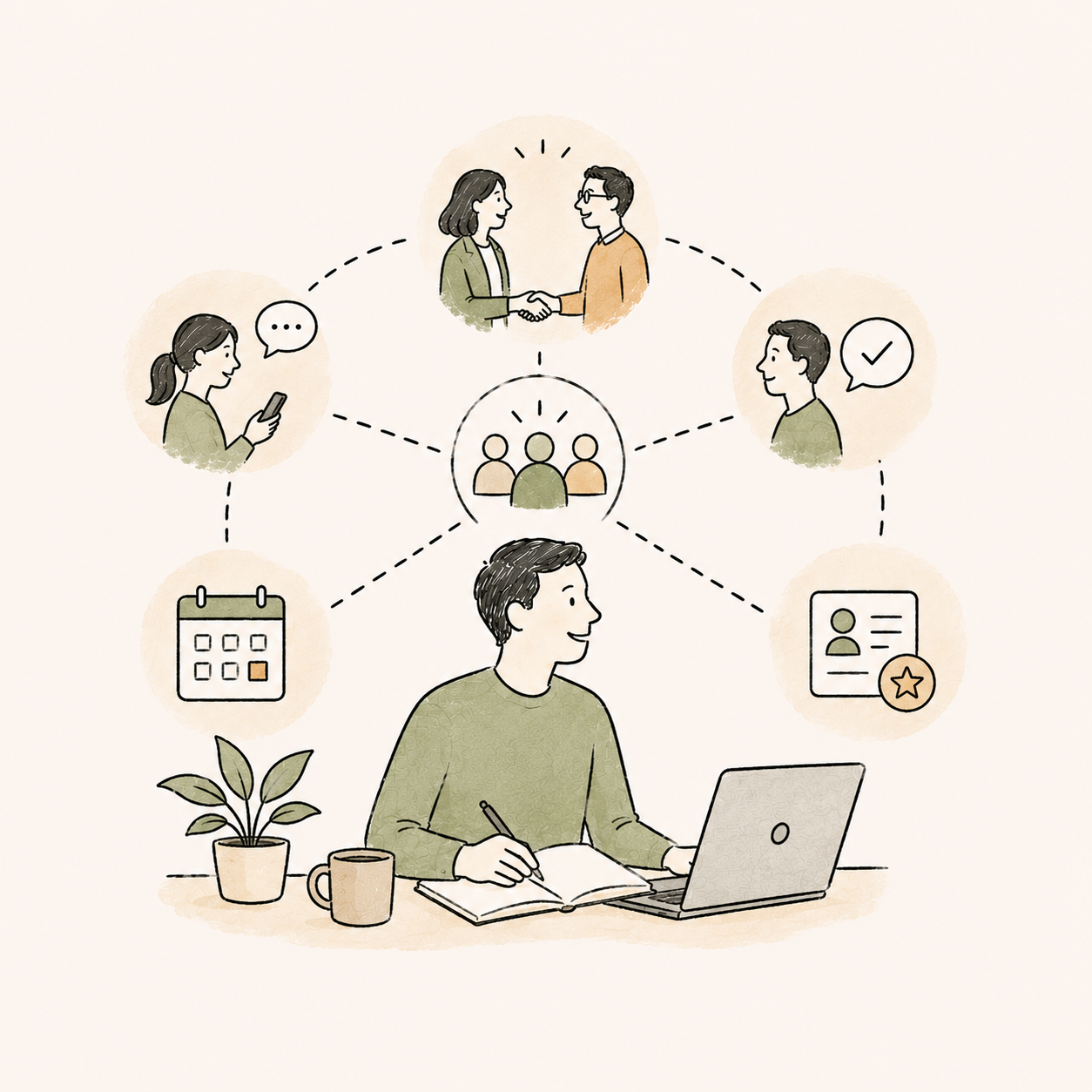
Something changed when AI got good at outreach. Suddenly anyone could send five hundred personalized-looking connection requests before lunch. Follow-up emails that referenced your job title, your recent post, even your hometown. Introduction messages that felt warm until you realized everyone in your industry was getting the same one.
The result is that most professionals are now swimming in contacts, and starving for connection. The volume problem got solved by machines, which means the thing that actually matters now is what machines can't replicate: the follow-up that remembers your daughter just started college, the check-in that references a conversation from eight months ago, the introduction that lands because the timing is exactly right.
Goodword exists in that gap. This guide isn't about meeting more people. It's about networking tips that will help you to stay meaningfully connected to the ones you've already met; because in a world where automated outreach is table stakes, genuine relationship maintenance is the actual differentiator.
For most of the last decade, networking advice focused on visibility: Show up to more events; post more on LinkedIn; send more connection requests... The underlying assumption was that the bottleneck was reach; if you could just get in front of more people, opportunities would follow.
AI made that assumption obsolete.
When anyone can generate a hundred thoughtful-sounding outreach messages in an afternoon, reach is no longer the scarce resource. Attention is. Trust is. The specific kind of personal context that signals you actually remember someone, not because a tool prompted you, but because you were paying attention when it mattered.
This changes the behavior that actually works. A connection request with a personalized note that used to stand out, now it's the baseline. What stands out today is the follow-up six months later that references something real, the introduction that's timed to a life moment, or the check-in that arrives before someone has to ask.
Robin Dunbar's research on relationship layers helps explain why this can't be automated away. Your brain is wired to maintain roughly 150 active relationships, organized in nested rings of closeness: five people you'd call in a crisis, fifteen close friends, fifty good friends, and so on outward.
Each layer demands real cognitive and emotional investment to maintain. An AI can send a message, but it can't do the remembering that makes the message mean something.
The professionals who will build the strongest networks over the next decade aren't the ones with the best outreach tools. They're the ones who treat relationships like the primary asset they are, and maintain them with the same intentionality that other people apply to their finances or their health.
Your mindset shapes everything about how you network. Before you walk into any room or send that first message, get clear on what real professional networking looks like.
That means prioritizing quality over quantity, setting clear goals, and understanding the value you bring to the table.
Most networking mistakes start with the assumption that more contacts automatically create more opportunities. In reality, people remember relevance and trust far longer than a quick introduction.
A few meaningful professional relationships are usually more valuable than hundreds of weak connections with no follow-through. The colleague who understands how you think and work is far more likely to recommend you than someone who barely remembers meeting you.
Research on social networks consistently shows that relationships weaken without maintenance. The strongest networks are not the biggest ones. They are the ones people actively invest in over time.
This matters more now than it did five years ago. When AI makes volume effortless, the professionals who stand out are the ones who've chosen depth over scale, and whose contacts actually remember them when an opportunity comes up.
Walking into a networking event without a plan feels like going to the grocery store hungry and without a list. You waste time and attention.
Before any networking opportunity, set a simple goal. Maybe you want to meet two people in your field, or maybe you want to learn about a specific company.
Having a target helps you focus your energy and makes every conversation more intentional. Write your goals down, even if it's just a quick note on your phone.
Networking works best when both people benefit from the relationship. Before you reach out to anyone, think about what you can offer.
Maybe you can share a useful article, introduce them to someone in your circle, or offer feedback on a project. Leading with generosity builds trust and goodwill.
People remember those who helped them before asking for anything in return. When you understand the value you bring, you approach networking with more confidence and less pressure.
Preparation separates people who make strong impressions from those who struggle through introductions. A little effort before a networking event or opportunity goes a long way.
The basics matter. Have a clear way to introduce yourself, know who you want to talk to, and bring the right materials.
Most people treat networking like a performance. They rehearse polished introductions that sound professional but forgettable.
Strong networking advice focuses less on sounding impressive and more on creating recognition and relevance. Instead of reciting a perfect elevator pitch, explain your work in a way that feels human and specific.
A memorable introduction usually covers three things:
The goal is not to sound polished. The goal is to give someone a reason to continue the conversation later.
If you know who will attend an event, look them up beforehand. Check LinkedIn profiles, read recent articles, or review the speaker list.
Knowing a bit about someone before you meet makes it easier to start a meaningful conversation. Pay attention to thought leaders in your industry, too. Following their work gives you relevant topics to reference when you meet new people.
Even in a digital world, business cards still help at in-person events. Keep a clean, updated card ready. Make sure your LinkedIn profile is up to date, because people will likely look you up after meeting you.
Keep a notes app or small notebook handy to jot down details about the people you meet. Those small details make follow-ups much easier later.
How you talk to people matters more than how many people you talk to. Good conversations lead to real connections, and they do not need to feel complicated.
The key is to start naturally, ask thoughtful questions, and show genuine interest through active listening and body language.
Skip the generic "So, what do you do?" opener. Instead, try conversation starters that invite more thoughtful responses:
These questions give the other person something meaningful to talk about. They also help you avoid forgettable small talk.
Open-ended questions keep conversations moving and show genuine curiosity. Instead of asking questions that lead to yes or no answers, try asking things like:
The goal is to let the other person share something real. Better questions usually lead to stronger professional relationships.
Active listening means giving someone your full attention. Put your phone away. Make eye contact, respond thoughtfully, and focus on what the other person is saying instead of planning your next comment.
Your body language matters just as much as your words during in-person networking. Face the person you're speaking with, maintain an open posture, and smile naturally. These small signals show that you value the conversation and respect the other person's time.
Networking opportunities come in many forms, from packed conference halls to virtual meetups and online communities. Each setting has its own strengths, and understanding how to navigate them helps you get more value from every interaction.
The best networking tips adapt to the environment while staying authentic.
At a networking event, most people cluster near the entrance or food table. Position yourself where conversations happen naturally, such as near the registration desk or in smaller breakout sessions.
Set a realistic target before you arrive. Meeting three to five people and having meaningful conversations with each of them is more productive than trying to work the entire room.
A few practical networking tips for in-person events:
Virtual networking has become a normal part of professional life. Whether you're attending an online event or connecting through professional communities, the same principles still apply.
Be present and engaged. Turn your camera on during virtual events whenever possible. Use the chat to ask thoughtful questions. Send a direct message to someone whose comment stood out to you.
When sending LinkedIn connection requests, personalize the message. Mentioning a specific topic from the event creates a much stronger impression than sending a blank request.
Modern networking happens between events, not just during them. But what counts as visible has changed. When AI can comment on posts, share resources, and engage in professional communities at scale, generic participation is effectively invisible. It looks like activity, and it doesn't build trust.
What still works — and works better than ever — is specificity. A comment that engages with the actual argument someone made, message that connects their recent post to a conversation you had months ago, a resource that arrives because you were genuinely thinking of that person, not because a tool told you it had been 90 days.
This is also where weak ties earn their value. Stanford sociologist Mark Granovetter's research shows that the most unexpected opportunities — the job you didn't know existed, the introduction that changed your trajectory — tend to come from the edges of your network, not your inner circle.
But weak ties are fragile. They need lightweight, specific touchpoints to survive. The good news is that's exactly the kind of maintenance AI can't authentically replicate. A brief, personal check-in from you lands differently than a templated one,and people can tell the difference now more than ever.
LinkedIn groups, industry forums, and professional communities give dormant relationships a reason to re-engage. Use them with intention, not volume.
Meeting someone is only the first step. The real work of building professional relationships happens after the initial conversation. Following up quickly, staying in touch, and adding value over time turn brief exchanges into lasting connections.
Reach out within 24 to 48 hours after meeting someone. A short follow-up message is usually enough.
Reference something specific from your conversation so the person remembers who you are. A simple message works well:
"Hi [Name], it was great talking with you about [specific topic] at [event]. I enjoyed hearing your perspective on [detail]. Let's stay connected."
This matters more now than it used to. The person you just met is likely receiving other follow-ups that same day, some of them AI-assisted, some of them nearly identical to each other.
A message that references something specific and real from your conversation isn't just courteous; It's the signal that you were actually present.
Most professional relationships do not end because of conflict. They fade quietly through lack of attention. One of the biggest networking mistakes people make is only reaching out when they need something. Strong professional relationships develop through small moments of relevance and consistency long before opportunities appear.
Checking in every three to six months usually feels natural. Share an article connected to a previous conversation, congratulate someone on a new role, or send along an event they might genuinely enjoy.
These small touchpoints keep weak ties alive and make dormant ties easier to reactivate later. The goal is not constant communication. The goal is staying meaningfully present over time.
Over time, some connections become trusted sources of advice, collaboration, and support. That kind of relationship develops through consistency and intention.
Look for opportunities to help your contacts before they ask. You might make a valuable introduction or publicly celebrate their achievements.
When you consistently add value, you build the kind of trust that turns casual contacts into professional allies.
Most networking mistakes happen after the introduction, not during it. People meet interesting contacts all the time, but relationships fade when nobody invests in maintaining them. Modern networking rewards consistency far more than visibility.
The strongest professional relationships usually begin as weak ties. A former coworker, a casual conference conversation, or a dormant connection can suddenly become valuable because trust already exists. The people who stay relevant over time are often the ones who continue showing up with context, curiosity, and generosity long after the first interaction ends.
Goodword encourages a more intentional approach to relationship maintenance so that important connections do not quietly disappear. The best networking advice is rarely about meeting more people. It is about staying meaningfully connected to the right ones before the opportunity arrives.
Networking feels difficult because most people approach it as a performance instead of a relationship. They focus on making a strong first impression but struggle to maintain professional relationships after the initial conversation. The real challenge is rarely meeting people. It is staying relevant and consistent over time.
Outdated networking advice usually treats success as a numbers game. Collecting business cards, sending generic LinkedIn requests, and attending events without follow-through rarely create meaningful opportunities anymore. Modern networking works better when people focus on trust, context, and long-term relationship maintenance instead of volume.
Modern networking rewards people who stay consistently present in small but meaningful ways, but the definition of "meaningful" has shifted. When AI can automate the check-in, the share, and the follow-up, doing those things isn't enough on its own. What creates the actual impression is specificity and timing: the message that arrives at the right moment, references something real, and clearly couldn't have been generated by a tool scanning your contact list.
The new bottleneck is trust, and trust is built through the kind of personal context and genuine attention that doesn't scale. Maintaining fewer relationships well, with real knowledge of what matters to each person and when, is now the strategy that compounds.
Many networking mistakes happen after the first interaction. People wait until they need help before reaching out again, which makes relationships feel transactional. Others focus too heavily on meeting new contacts while neglecting dormant relationships that already contain trust and familiarity.
Weak ties often introduce people to new industries, ideas, and opportunities outside their immediate circle. Close relationships usually provide emotional support, but weaker professional connections tend to carry fresh information and unexpected opportunities. Maintaining those lighter connections over time creates a more resilient network.
Most professional relationships benefit from occasional, relevant touchpoints instead of constant communication. Reaching out every few months with a thoughtful message, article, or congratulations usually feels natural and sustainable. Consistency matters far more than frequency.
The best professional relationships grow through curiosity, relevance, and generosity. Instead of leading with requests, focus on understanding what matters to the other person and finding small ways to contribute value over time. If you want a stronger network without forcing constant outreach, start by maintaining the relationships you already have.

.svg)





.png)