You met someone worth knowing at a conference. You traded numbers, said you would follow up, and meant it. Four months later, they raised a round through someone else's introduction. The personal CRM vs networking app question usually starts with a moment exactly like that one.
Both categories promise to fix it. One stores what you know about people, the other helps you meet more of them. Neither one, on its own, tells you who to call this week or why this week is the moment. That gap is where referrals, roles, and deals go missing.
This is a decision guide, not a think piece: what each category is actually built to do, where each falls short for professionals who treat relationships as a career asset, and how to pick based on the opportunity you need to create next.
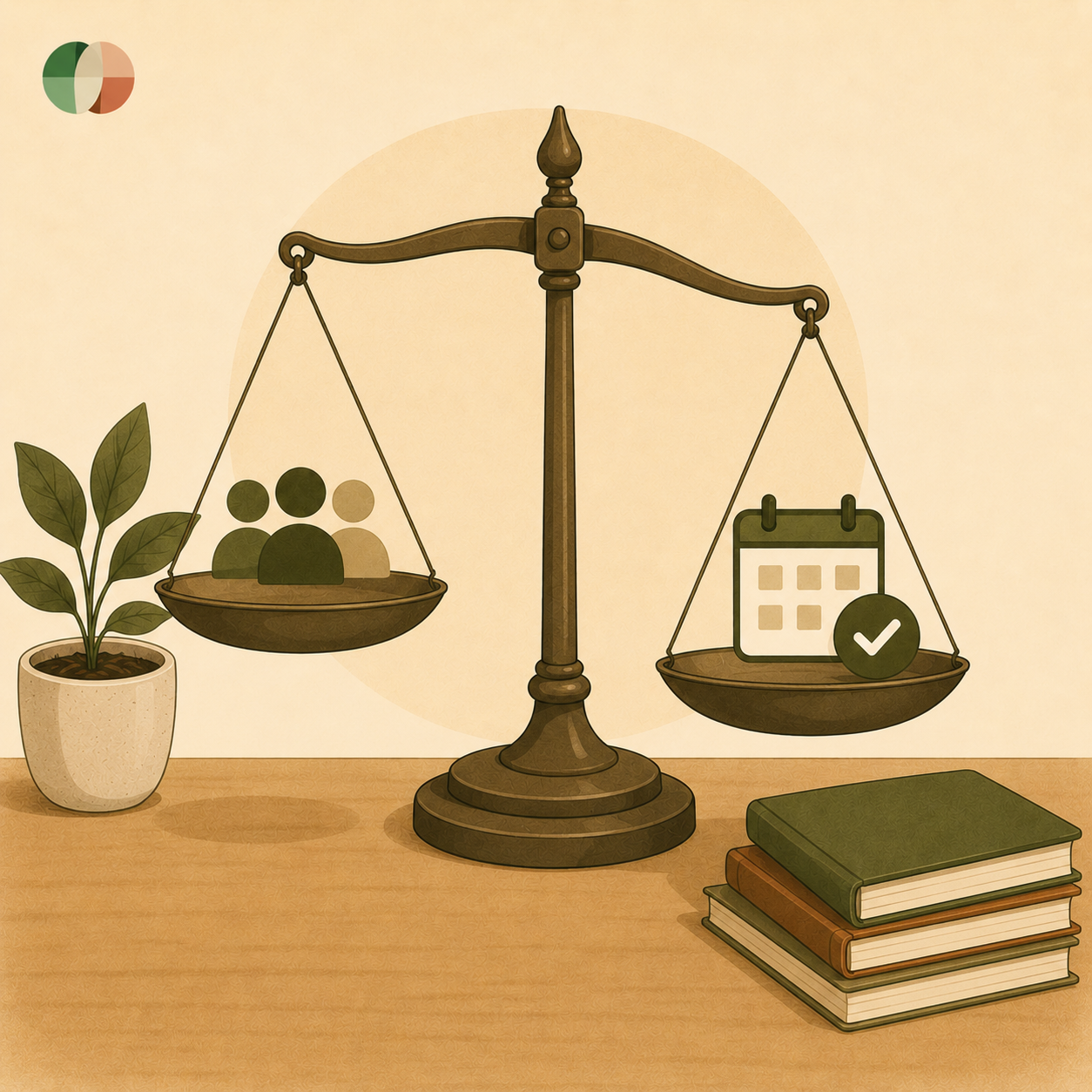
These two tools solve different problems, even though they market to the same person. One is about memory. The other is about reach.
A personal CRM is a private system for tracking your relationships. It stores who someone is, when you last spoke, and what you discussed. There are no deal stages or sales pipelines, which is what separates it from a business CRM.
Think of it as personal relationship management built on top of your address book. Your phone contacts and Google Contacts hold names. A personal CRM holds the reason those names matter, so you can walk into a call already knowing that someone just moved to Austin and is hiring a head of ops.
Networking apps for professionals point outward. They help you find people you do not know yet through events, communities, mutual connections, and shared interests.
The value shows up when you are new: a new city, a new market, a new role. If your problem is that your network is too small or too homogeneous, discovery is the right tool. If your problem is that you already know 2,000 people and speak to eleven of them, discovery makes it worse.
Contact management software organizes. Discovery introduces. Neither one decides on your behalf that today is the day to email the former colleague who just joined your dream client.
That decision is the whole game. A warm introduction that arrives two weeks late has already cooled into a courtesy note. What happens in the gap between the two categories matters more than which category you pick.
There are three layers here, and most people confuse the first with the third. Records, reach, and relationship intelligence do very different work.
A record holds facts: title, company, email, interaction history. Good tools pull that in from Gmail, Outlook, Google Calendar, and LinkedIn so you are not typing it by hand.
Contact enrichment and job change alerts keep those facts current. That matters because a role change is a reason to reach out that does not feel forced. Someone gets promoted, you send two honest sentences, and the relationship stays alive for another quarter.
Reach is about surface area. Social media integration across LinkedIn and other platforms shows you who exists near your world, and who is one degree away from the person you need.
Reach is genuinely useful when you have a gap. A founder raising a first round often needs a path to five investors, not better notes on old classmates. Discovery builds that path.
Relationship intelligence is the layer that connects context to timing. It is the difference between knowing someone works in climate and knowing they just left a clean energy role the same week your friend launched a climate fund.
That overlap plus timing is what turns a nice-to-meet into a need-to-meet. Most tools stop at the record. The intelligence layer is where the referral actually happens.
Choose a personal CRM when your network is already big enough, and your real problem is upkeep. If names are slipping through, structure beats discovery. What a good CRM should actually do comes down to reminders that fire before a relationship goes cold, not just a bigger database.
Follow-up reminders are the core feature, and they earn their keep. A prompt that says you have not spoken to a former client in 90 days is often worth more than ten new introductions.
Consultants and solopreneurs feel this fastest. Repeat work and referrals come from people who already trust you. Losing touch with them is the most expensive habit in independent work.
Some careers run on hundreds of light relationships rather than a dozen deep ones. A personal CRM is built for that shape. It tends to fit best when you are:
If you like custom fields, tags, and your own review rhythm, a personal CRM rewards that. You get to define what a warm relationship means to you.
The trade-off is honest: manual systems only work if you maintain them. The best personal CRM software is the one you still open in six weeks, after a hard month, when a deal depends on remembering one detail.
Pick a networking app when the shortage is people, not memory. If your calendar has room but your network does not have range, reach wins.
Moving cities resets your inner circle. So does changing industries. In both cases you need new bridges before you need better notes.
Career transitions work the same way. In "Provisional Selves," her 1999 study of professionals moving into senior roles, Herminia Ibarra found that people adapt to a new career identity by experimenting in new networks before they fully feel like the new role, not after. Discovery tools shorten that runway, which shortens the time to your next role.
Founders raising capital, consultants entering a new vertical, and freelancers chasing a new client type all share one thing. The right person is often two degrees away and completely unknown to them.
A networking app plus a meeting scheduler turns that into booked conversations. Volume is the point at this stage, and that's fine, as long as it stays a stage rather than becoming the whole strategy.
The risk with reach is obvious. You collect 200 personal connections and remember four. Discovery without capture just produces a longer list, and the number of real relationships stays exactly where it started.
So set a rule now. Every new contact worth keeping gets context recorded within 24 hours, or it does not count. That single habit is what turns reach into a network that produces work.
Stop comparing feature lists and start with the outcome. The tool you need depends on what you are trying to make happen in the next 90 days.
Referrals come from trust plus recall. Someone has to remember you clearly enough to put their reputation behind you.
That means context wins over reach. Notes on what a contact cares about, what they are hiring for, and what they asked you about last time are what let you follow up professionally instead of generically.
Mark Granovetter's 1973 research on weak ties found that acquaintances are consistently the source of new opportunity, and they're also the fastest relationships to fade without light, regular touch points.
If you are changing lanes, your existing network mostly knows the old you. You need people in the room you are trying to enter.
Weight discovery here. Then convert fast: one conversation, one recorded detail, one reason to speak again. Staying in touch with new contacts during a transition is what surfaces roles before they get posted.
Sales professionals already have a business CRM with pipeline management, lead management, a kanban board, and email sequences. That system exists to track deals.
Keep them separate. Marketing automation and email campaigns are built for volume. Relationship health is built for one person at a time, and a Slack ping from a client you nurtured for two years still closes faster than any sequence.
Whatever category you choose, the system only works if it changes your behavior. Here is the part that actually produces results.
Write down three things while the conversation is fresh: what they are working on, what they need, and one personal detail. That is it.
Personal context beats a job title every time. "Your daughter started at Michigan, how is she settling in?" builds more trust in one line than a year of polite LinkedIn likes. Relationship management software should make that capture take under a minute, whether you type it or dictate it.
Tier your people. A handful get monthly contact. A wider group gets quarterly. Everyone else gets twice a year.
Then let smart reminders carry the load. Automated reminders based on interaction history are what keep a dormant tie from becoming a stranger. In "Dormant Ties: The Value of Reconnecting," Daniel Levin, Jorge Walter, and Keith Murnighan found that reconnecting with people you've lost touch with often produces more useful information than turning to current contacts, because trust already exists and time apart has given them new information.
The highest-value tool does not wait for you to search. It connects Gmail, Outlook, Google Calendar, and LinkedIn, watches for change, and tells you who to talk to now.
You can approximate this with Notion, Zapier, or Make, though most people don't stick with it because the glue tends to break. What you want is contact organization plus relationship intelligence in one place, so the prompt arrives before the window closes.
Contact them before you need anything. Set a reminder cadence and send short, specific notes tied to their world, not yours. A relationship you touched three times this year will take your referral request seriously.
Capture notes within 24 hours of every real conversation, including personal details, not just job facts. Store them somewhere you review before your next call. Memory fails under a busy quarter. Discipline does not.
Look for overlap plus timing. The strong match is someone whose current situation lines up with a need in your world this month. Tools that track role changes and recent activity make that overlap visible instead of accidental.
Use a social platform to find people and broadcast. Use a relationship tool to remember them and follow up. Platforms reward volume. Careers reward the handful of relationships that hold over years.
AI is good at noticing patterns you missed: silence, role changes, shared interests, timing. You still decide who deserves the message and what it says, and you still write it yourself.
Anything that keeps light touch points alive with weak and dormant ties. That usually means reminders, contact enrichment, and searchable notes across your full network. Your inner circle is easy to maintain. The outer rings are where the surprising opportunities live.
The honest answer to the personal CRM versus networking app question is that they solve different halves of one problem. Records without timing go stale, and reach without context just adds names.
If you already have the network, the real work is showing up at the right moment with the right context. That is why a third option exists: a networking copilot built around relationship intelligence and proactive reconnection, rather than storage or discovery.
Goodword surfaces the person you should talk to before the window closes, using context you already created. Start a free trial and see what your existing network has been holding for you.

.svg)





.png)