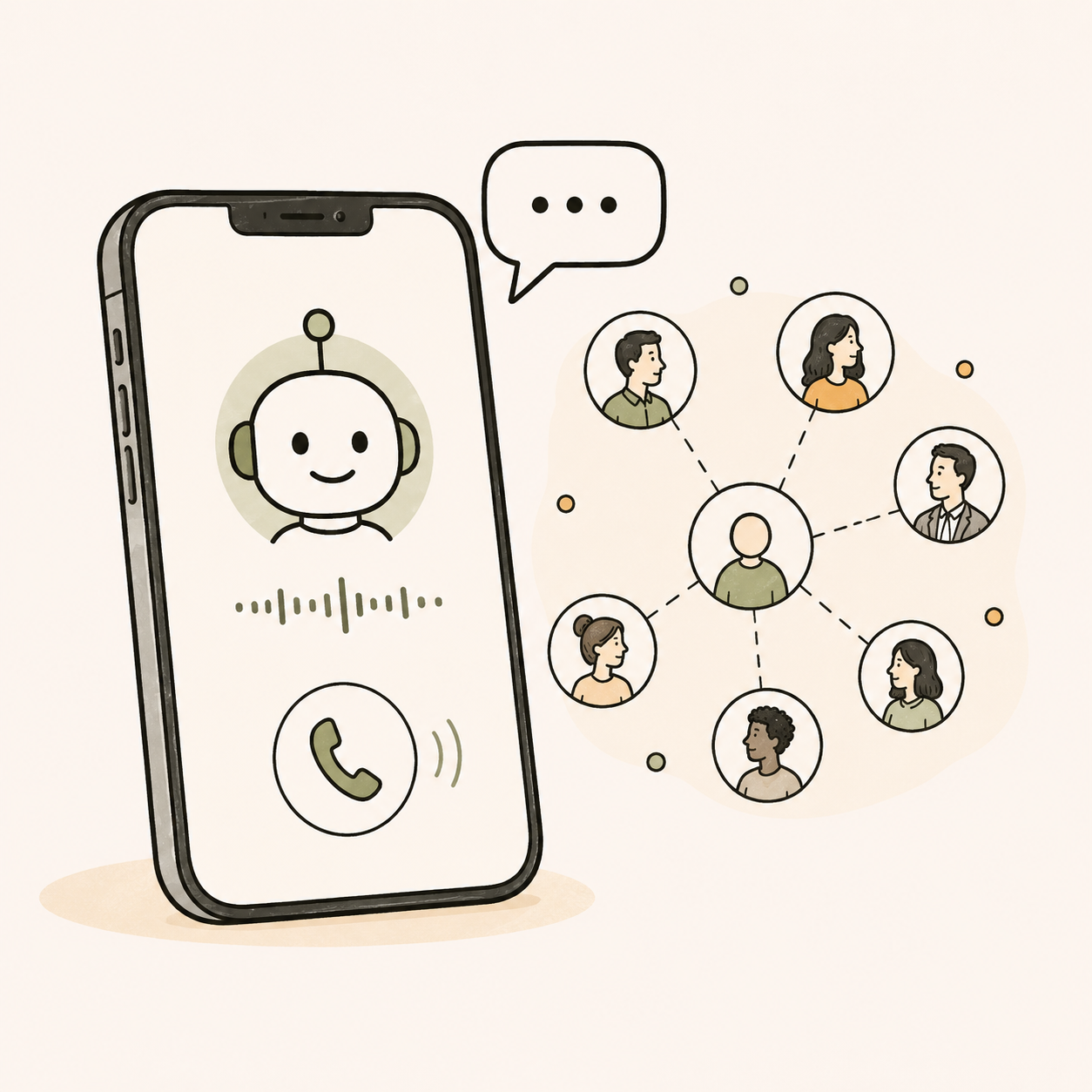
Professional relationships rarely disappear all at once. Most fade quietly due to missed follow-ups, shifting priorities, and long stretches without meaningful conversation. That friction sits at the center of why AI networking tools like Boardy AI are getting so much attention from founders, operators, and ambitious professionals.
The interesting shift has less to do with automation and more to do with human behavior. People already have access to large networks but struggle to maintain context, remember timing, and stay relevant to the right people over time.
But not all AI networking tools are solving the same problem. Boardy AI focuses on discovery — meeting new people through curated, voice-first introductions. Goodword focuses on continuity, helping professionals maintain and deepen relationships they already have.
These address two different stages of the relationship lifecycle, and understanding that difference is what makes comparing them worthwhile.
Boardy acts as a voice-first AI networking agent. It calls users, remembers what they share, and introduces them to people it believes they should know. On the surface, that sounds like another experiment in AI matchmaking. But the product becomes more interesting when you look at the underlying relationship problem.
Most professional networks gradually decay. That distinction matters because networking problems rarely start with discovery. Most professionals already know enough people to unlock opportunities. The harder challenge is maintaining relevance and trust after the first interaction fades.
That's precisely where Boardy's scope ends and Goodword's begins. Boardy is designed to start relationships, and Goodword is designed to sustain them by tracking context, surfacing the right moment to reconnect, and keeping existing relationships from going quiet.
You start by entering your phone number on Boardy.ai. Shortly after, the AI calls you directly. Instead of asking you to fill out another profile, it starts a conversation about your goals, experience, and the kinds of people you want to meet.
That distinction matters. Voice creates context faster than static profiles ever can. People communicate nuance through conversation: tone, curiosity, energy, uncertainty, and ambition. Most networking platforms flatten those signals into bullet points and job titles, while Boardy's conversational format attempts to preserve more of the human layer.
Traditional networking advice often encourages people to maximize reach: Add more contacts, send more messages, attend more events.
But relationship science suggests the opposite. Human beings maintain a limited number of meaningful relationships at any given time.
The strongest professional networks don't come from collecting contacts. They come from maintaining relevance and context with the right people over long periods. That's where AI networking tools become interesting.
The value isn't automation alone, but reducing the cognitive load of remembering who matters, why they matter, and when to reconnect. Boardy addresses this at the introduction stage, while Goodword does it across the entire relationship lifespan, helping professionals maintain context with people they already know and trust.
Boardy uses a double-opt-in introduction system. When the AI identifies a potential match, both people have to agree before the introduction happens. That process helps filter out low-quality networking interactions that waste everyone's time.
The platform also appears to prioritize compatibility beyond job titles alone. Shared interests, goals, timing, and mutual benefit all influence whether an introduction happens.
That's an important shift because professional opportunities rarely emerge from titles alone; they emerge from alignment.
The popularity of Boardy AI reflects a broader change in professional behavior. People increasingly value trust, relevance, and curated introductions over massive public networks.
As AI-generated outreach becomes more common, generic networking loses value. Human context becomes the differentiator. Tools like Boardy and Goodword reflect two responses to that shift. Boardy bets that better introductions — more contextual, more human-feeling — can improve where relationships start. Goodword bets that the bigger opportunity is in what happens after the introduction: the follow-ups, the reconnections, and the slow compounding of trust over time.
One reason tools like Boardy resonate is that they operate in the space between strangers and close friends.
Relationship researchers have long found that weak ties often create the most valuable professional opportunities. The person who changes your career usually isn't your closest friend.
It's often someone slightly outside your immediate circle who brings new information, new perspectives, or unexpected introductions.
But weak ties require maintenance. Without occasional interaction, those relationships disappear silently. That's one reason many professionals feel disconnected despite having large networks. Boardy attempts to improve the starting point of professional relationships by making introductions feel more contextual and intentional from the beginning. But long-term value still depends on whether people continue to invest in the relationship after the introduction.
Boardy spread quickly across LinkedIn because the experience itself feels memorable. Talking to an AI on the phone creates novelty, but the deeper reason people share their experiences is emotional. Most professionals rarely feel personally understood during networking interactions.
Traditional networking often feels performative. People optimize profiles, send templated outreach, and collect conversations that go nowhere.
Boardy changes the emotional dynamic by starting with dialogue instead of visibility. That distinction matters because people remember conversations that feel relevant to their lives.
There's a common assumption that AI will automate professional relationships entirely. The opposite may happen. As automation increases, trust becomes scarcer and therefore more valuable.
Anyone can generate outreach with AI, but fewer people can create genuine familiarity, credibility, and timing. That's why the future of networking probably belongs to people who combine AI assistance with stronger relationship habits. Technology can facilitate introductions. It cannot manufacture trust.
That gap between introduction and trust is where most networking systems still break down. People don't lose opportunities because they lack access, but because relationships fade before momentum compounds.
Boardy's rapid fundraising attracted attention because investors saw more than a novelty product. The company raised $3 million in a pre-seed round before later securing another $8 million in seed funding.
But the more interesting part of the story is how the product reportedly influenced the fundraising process itself.
Some investors used the platform personally before investing. That detail matters because professional trust compounds faster through direct experience than through marketing alone.
In many ways, the fundraising story reinforces the broader thesis behind AI networking tools: relationships still drive opportunity. People invest in people they trust, understand, and remember.
Boardy's founding team combines experience across fintech, AI, and startup building. CEO Andrew D'Souza previously co-founded Clearco, which gave him firsthand exposure to the importance of relationship-driven business growth.
The broader team includes operators and technical leaders focused on making networking feel more personal instead of more transactional.
That philosophy shows up clearly in the product design. Most AI products prioritize efficiency above all else. Boardy positions itself differently by emphasizing conversation, empathy, and relationship-building.
That approach aligns with a larger truth about professional relationships. People rarely remember the most efficient interaction. They remember the interaction that made them feel understood.
The most important insight from any serious Boardy review has very little to do with AI itself. It's also where Boardy and Goodword part ways.The real issue is that modern professionals struggle to maintain relationships consistently.
Most people already know enough individuals to unlock future opportunities. The problem is that modern networking encourages constant discovery while neglecting relationship maintenance.
That's where intentional networking creates an advantage. The professionals with the strongest networks usually aren't the most extroverted people in the room. They're the people who stay meaningfully connected over time.
A networking platform only becomes valuable if introductions lead to meaningful conversations. Boardy's double-opt-in model improves the odds by making sure both people want the introduction before it happens.
That doesn't guarantee chemistry or long-term value, but it does reduce the friction and awkwardness that define most cold outreach.
The better metric for evaluating any AI networking tool is simple: how many introductions lead to continued relationships? That's where long-term value actually compounds.
Any platform that stores personal goals, conversations, and relationship context creates legitimate trust concerns.
Professionals should always understand:
Trust isn't only important between users. It also matters between users and the systems managing their relationships. That reality will shape the future of AI networking more than product features alone.
The rise of AI networking tools reveals a larger shift in professional relationships. Most professionals don't need another networking platform to meet new people. What they need is a better way to maintain context, follow through consistently, and stay connected to relationships that already carry trust.
That's why the strongest networks usually belong to people who follow up consistently, reconnect with dormant ties, and invest in relationships before they need something. Small moments of intentional outreach often create bigger opportunities than constant networking activity.
Goodword helps professionals stay connected with the right people without relying on scattered notes or reactive follow-ups. Start maintaining stronger relationship context, reconnecting with the right people at the right time, and turning more professional relationships into long-term opportunities.
Boardy AI is a voice-first networking platform that uses AI to connect professionals through curated introductions. Instead of relying on profile browsing or cold outreach, users speak directly with an AI agent that learns about their goals, experience, and interests before suggesting relevant connections.
Most AI networking tools analyze professional information, goals, and conversational context to recommend introductions or relationship opportunities. The strongest tools focus less on volume and more on helping people maintain relevant, high-quality professional relationships over time.
AI can help networking when it reduces friction around follow-up, context, and relationship maintenance. It cannot replace trust or genuine connection, but it can help professionals stay organized, reconnect with dormant ties, and make introductions more intentional.
Boardy AI may feel valuable for founders, operators, and professionals who dislike transactional networking or struggle to maintain consistent outreach. Whether it feels worth it depends on the quality of introductions and whether the conversations lead to meaningful long-term relationships.
Weak ties often create the most valuable opportunities because they introduce new information, industries, and perspectives into your network. Many career opportunities come from people outside your closest circle rather than from your strongest existing relationships.
Traditional networking platforms prioritize visibility through profiles, feeds, and messaging. Tools like Boardy focus on making introductions more contextual and human from the start. Tools like Goodword focus on what comes after, helping professionals maintain relationship context, reconnect at the right moment, and turn introductions into lasting opportunities.
The best AI networking tools help you maintain context, reconnect intentionally, and improve relationship consistency without making networking feel automated. If you want stronger professional relationships, start by using tools that support thoughtful follow-up instead of just increasing contact volume.

.svg)





.png)