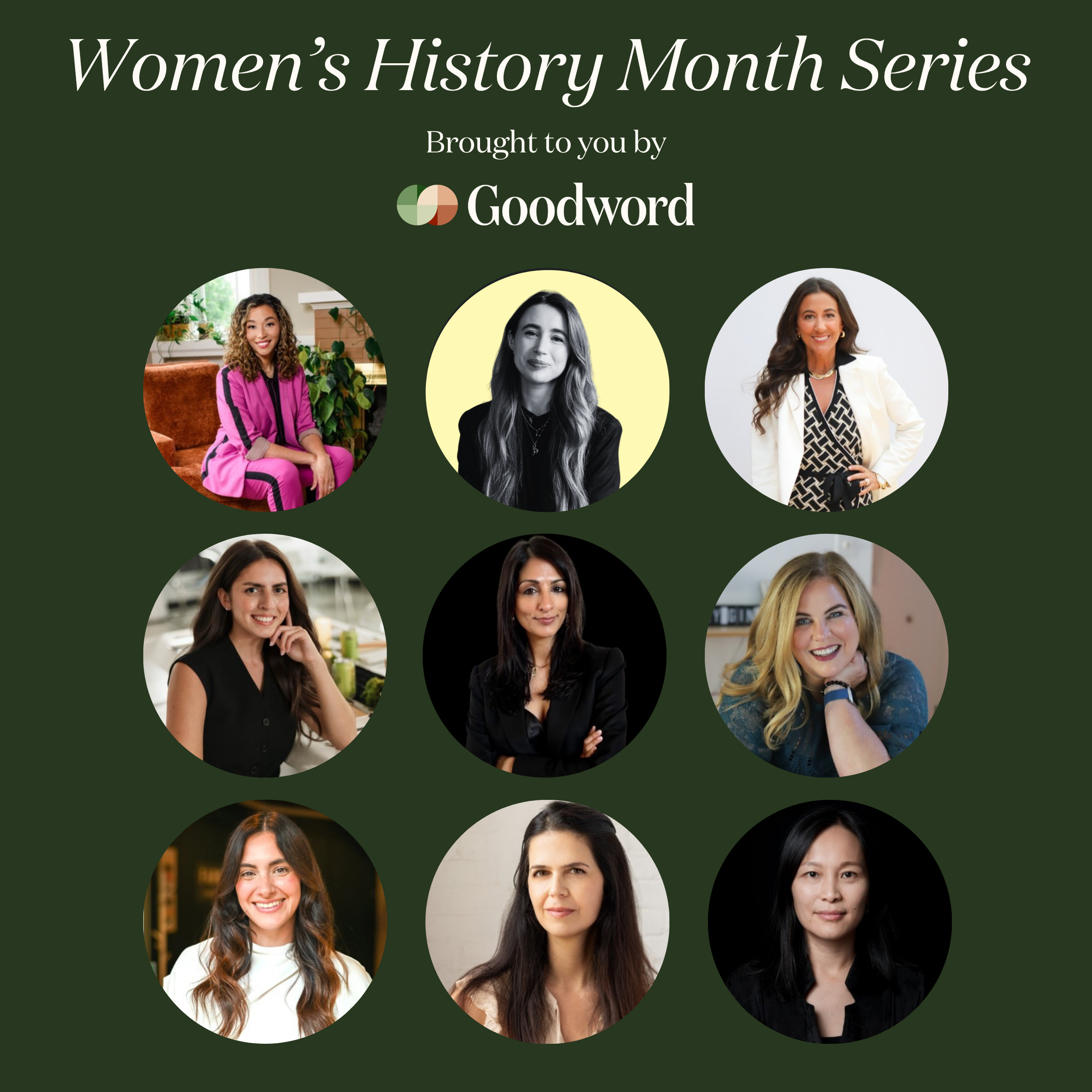
The best piece of relationship advice Mallory Contois, founder of Old Girls Club, ever received was that the golden rule is wrong. Don't treat people as you want to be treated. Treat them as they want to be treated. It sounds like a small distinction, but it kept coming back across 100+ conversations, in different words, from women at very different stages of their careers.
Early in her career, Paige Hendrix Buckner, CEO of AllRaise, was meeting with a community organizer. She was ready to get straight to business. He stopped her: "Pause. Tell me more about you."
She didn't understand it at the time, but the insight she kept returning to over the years was this: if I understand who you are, I can be helpful well beyond this moment. "That conversation and that prompt has changed how I connect with people," she said, "in a really powerful way."
It's a reframe of what professional networking typically rewards. Most advice pushes toward the ask, the pitch, the follow-up. But the women who described their strongest relationships all started somewhere earlier — with genuine curiosity about the person in front of them.
Vanessa Liu, founder of Sugarwork, learned a version of this from her mentor Pat Headley, author of Meet 100 People. "Uncovering what makes you tick, what makes the other person tick — there's magic to that," Vanessa said. "I always just try to understand what drives that person, what we might have in common, what I can learn from them." What she's describing is less a strategy than a genuine orientation toward other people — one that, in her experience, tends to build the kind of relationships that stick.
Jenny Fielding, founder and managing partner of Everywhere Ventures, is candid that she's not the friend you call when you've had a bad day. She rarely has time for that. But the people in her life know something more important: when it counts, she'll be there. "They know that they can call me. They haven't spoken to me in a year. They know that I will drop whatever I'm doing and I will be there."
Most advice about how to maintain professional relationships focuses on cadence — how often you follow up, how consistently you show up, how well you manage your touchpoints. But Fielding is describing something different: reliability that's about depth rather than frequency. Not being present everywhere, but being completely present when it matters.
Katie Dunn, a seasoned operator who spent years in banking before moving into the startup world, learned the hard way what happens when you do the opposite. Early in her career, she said yes to every conversation — honored to be asked, eager to help, always available. "I would walk away with a huge long to-do list and didn't feel like after a while that I was actually getting any benefit out of it," she said. "It felt like conversations to nowhere." The lesson wasn't to become less generous. It was to be more intentional — because real reliability requires enough capacity to actually follow through.
Cate Luzio, founder of Luminary, offered the framework that best captures what the strongest relationship builders across these conversations seemed to share. She described being advised early in her career to think of her network not as a contact database, but as a board she was actively curating. Who sits in that room? Operators, truth tellers, connectors, mentors, sponsors, eventually investors. Work backward from the board you want, and invest in those relationships intentionally.
"Some of those board members aren't involved in the day-to-day," she said. "But when you need them, they're there."
Not all relationships are the same kind of asset, and not all deserve the same kind of attention. The board framing forces prioritization — and it reframes relationship maintenance from a chore into something closer to stewardship.
Riki Zahn, founder of After Hours Club, offered the piece of advice that runs most directly against how professional networking usually works. Her best relationship insight was to be more open-minded when meeting people, because you're almost never seeing someone at their truest in a first encounter.
"You don't know their struggles. You don't know what they've been through," she said. She's been guilty of the quick judgment herself, and has learned the cost of it. Her strongest professional relationships have come on what she calls the slow burn: the second meeting, the third, the moment someone finally felt comfortable enough to be real.
The pressure in most networking contexts is to assess quickly, prioritize efficiently, decide who's worth more time. But that framework tends to filter out exactly the people who aren't at their best in a first encounter — which isn't the same as the people who won't matter.
Jaclyn Pascocello, founder at Fabrik, described her approach to professional relationship management as treating relationships like an investment portfolio, not a single transaction. "There's so much value in giving value before you need something. And that can only really come with time."
Seema Alexander, founder and CEO of Disruptive AI, got a version of this advice early in her career: always add value in every circumstance, every situation. "I don't go into it with an ask," she said. "I go into it to ask people, how can I help you? And I think people get caught off guard when you're genuinely asking."
The portfolio metaphor adds something the board framing doesn't address: the idea that the return isn't immediate, and that the relationships you've been building for years are often worth more than the ones you're building right now. The networking follow-up that pays off six months later. The warm introduction that traces back to a conversation you had before you ever needed anything.
Paige Buckner put it plainly: "I'd rather have that relationship a decade from now than this transaction in this moment." And the phrase she's heard over and over in the last six months, that she now takes as a sign: move at the speed of trust.
Taken together, what these answers describe is a model of relationship intelligence that's less about tactics and more about orientation — staying curious about the person in front of you before making any ask, showing up when it counts, and being strategic enough about which relationships to invest in that you have the patience to let them compound.
Almost none of it was learned in a professional context. Most of it took years to understand. And none of it shows up in a quick-tip post.
This is part two of Goodword's Women's History Month series. Read part one: The Networking Playbook Has a Gender Problem.

.svg)