"I have had to master the art of commanding a room while still being made to justify my presence in it."
Roxanna Couse, a brand and marketing executive, was one of 100 women I spoke with this month about networking. Across those conversations, that sentiment surfaced again and again — in different words, from women at different stages of their careers, in different industries, but pointing at the same thing.
Here's what they said, and what the research confirms.
The piece of advice that came up most often — "just ask for what you want" — exposes the gap most clearly. For women, especially women of color, the same directness that reads as confidence in a man can read as aggression or entitlement. Roxanna's experience isn't an outlier. It's a pattern — and the data backs it up.
In 2019, Columbia Business School professor Mabel Abraham analyzed six years of actual referral data from over 2,300 members of entrepreneurial networking organizations and found that women in male-dominated industries received 27% fewer referrals than men in the same networks — even when they were asking just as often. The bias, Abraham found, doesn't live in the people you're networking with directly. It lives in the moment when your contact decides whether to pass your name along.
Mallory Contois, founder of Old Girls Club, identified the root of it. Men share information freely and do favors without needing to establish a full friendship first. Women are taught the opposite — that asking for anything before the relationship is fully built risks looking transactional. "Because God forbid they think we're just trying to ask them for something." The result is that women over-invest in relationship groundwork before making the ask that men make on day one.
The same dynamic plays out in investor contexts. Shruti Gupta, a govtech founder, described what happens when women try to bring the ease that gets men funded: "Showing up casually or trying to just be friends — it never works out. What is given to the frat boy attitude that YC backs…that would never work for women. They're always like, you're too friendly, you're unserious."
Emily Boschwitz, who built her career in growth and marketing at companies like Hims, offered the most actionable reframe: stop leading with confidence and lead with credibility instead. Bring insight, demonstrate preparation, ask thoughtful questions before making requests. "Confidence opens doors. Credibility keeps them open."
Amira Barger, a communications strategist and author working at the intersection of leadership and equity, offered the clearest articulation of why this works. Most networking advice, she said, assumes the playing field is level — which means it asks women to project confidence in rooms that weren't built to receive them that way. Her answer was to stop competing on that terrain entirely.
"Instead of leading with self-promotion, I lead with insight and questions. The right question placed perfectly can change how the room thinks — and it turns out that curiosity is a powerful equalizer. When you ask the right question at the right moment, you don't have to force authority. The room gives it to you."
LinkedIn data shows that women in the U.S. are 28% less likely than men to have a strong professional network — a gap that holds across virtually every country measured. McKinsey's Women in the Workplace report helps explain why: women receive less sponsorship than men at every career level, and when that support is equalized, the ambition gap disappears entirely. The gap isn't in drive. It's in who's saying your name when you're not in the room.
Meg Gold, Co-Founder of BONDE, put the structural reason plainly: most women are steered toward mentors when what they actually need is sponsors — people with influence who will advocate for them, not just advise them.
Karen Li, a founder in the B2B mental health tech space, identified a related cost: the pressure to learn about male-dominated industries and interests just to fit into the rooms where sponsorship happens. "What about us bringing in our own personalities and interests and perspectives?"
And Jaclyn Johnson, founder and entrepreneur, named a piece of advice that rarely gets examined — underpromise and overdeliver. "That advice works great for men. Women don't always get the luxury of that runway. Women often have to overpromise and overdeliver just to be taken seriously in the first place."
Not every woman framed it as a problem to solve — and more than a few had simply learned how to play golf. Cate Luzio, founder of Luminary (a global professional education and networking platform) spent two decades in male-dominated industries and made a deliberate choice to look at it differently: "I never looked at something with that lens. I looked at it the opposite way — what's working for them that I could be doing better?"
Alexis Allen, an operator at the intersection of growth and venture, pushed back on the idea of a universal playbook altogether: "I don't think any strategy is limited to a certain group. The real work is figuring out which ones align with how you naturally connect and build trust."
Both are right, in a way. The women who've navigated this most successfully aren't waiting for the playbook to change. They've written their own.
The gap isn't just in how women feel about networking. It's structural, and the data bears it out. What stayed with me wasn't the frustration — it was the clarity. These women have figured out what the standard networking playbook missed, and built their own.
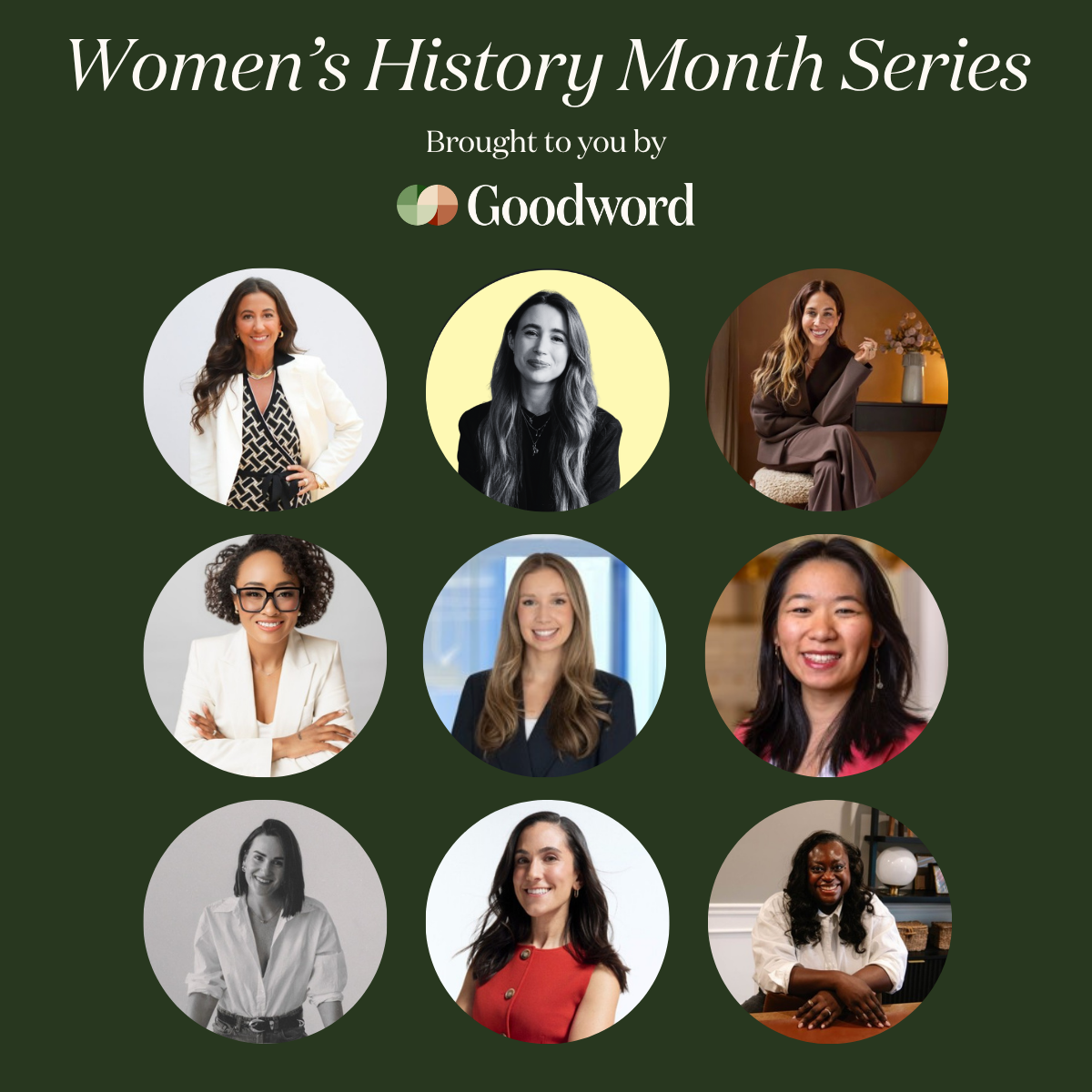
This is part of Goodword's Women's History Month series. Want to try Goodword? Start your trial →

.svg)