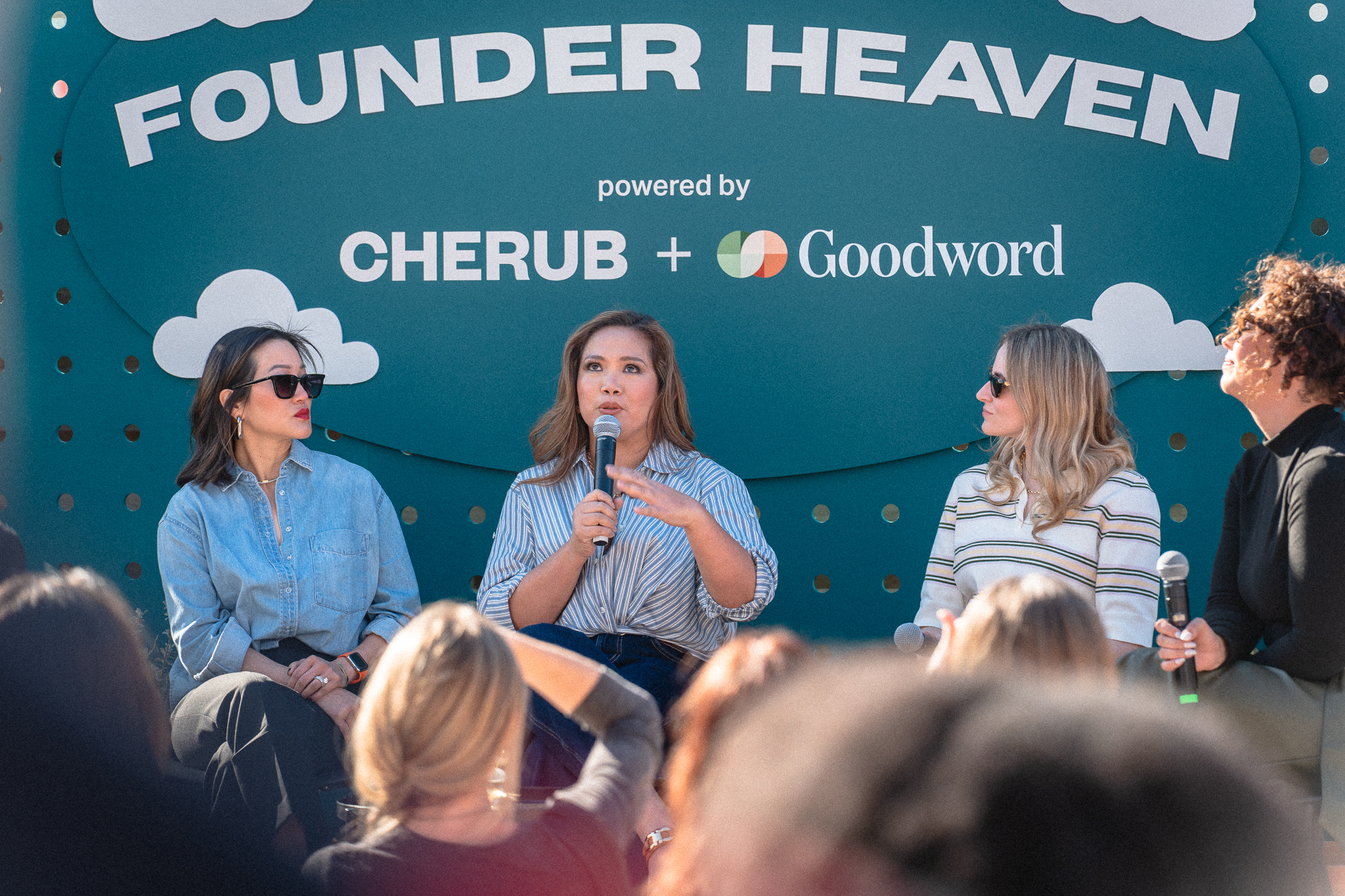
We just got back from South by Southwest (SXSW), one of the world's largest convergences of tech, media, and culture. The energy, as always, was electric.
Goodword co-hosted Founder Heaven with Cherub, and being in the room reinforced something that sits at the core of what we build: there is no digital substitute for what happens when people are actually in the same place at the same time.
And yet, most people get in-person events only half right.
There's real science behind why in-person gatherings feel different.
Research consistently shows that face-to-face interaction accelerates trust in ways that virtual communication doesn't replicate. Eye contact, mirrored body language, the subtle physical cues that signal genuine attention — these run in the background of every in-person conversation, building connection in ways we don't consciously notice. It's why twenty minutes with someone at an event can do what fifty digital messages couldn't.
And then there's serendipity. The conversation that wasn't on the schedule. The introduction in the hallway. The offhand comment that becomes a collaboration months later. These moments aren't random. They're the product of proximity and density. Put enough interesting people in the same place and let things unfold.
I felt this firsthand at SXSW. At Founder Heaven, I finally met people I'd only ever known online, including Marina Middleton, CEO of Create and Cultivate, a media company and community built for ambitious women. Later that week, at their supper club, I found myself sitting near KK Hart, one of the panelists from our own event. The right rooms have a way of pulling the same people back together.
That's the thing about a great event. It's not just who you came to see. It's who you end up next to.
Most of the value from in-person events evaporates within 72 hours.
This isn't a discipline problem. It's a systems problem. Robin Dunbar's research established that the human brain can actively maintain roughly 150 stable relationships, a number that gets stress-tested fast at an event like SXSW, where you might meet 50 meaningful people in 48 hours. Without a way to hold onto context, most of that potential disappears.
The pattern is consistent: people who are genuinely good at networking, who show up, make real connections, do all the right things in the room, lose most of what they built because the follow-through fell apart. The person you were excited about becomes a name in your contacts you vaguely recognize six months later.
Professional relationship management shouldn't depend on memory and good intentions. It needs infrastructure.
One more thing that struck us at SXSW, and at Founder Heaven specifically: community isn't just a nice feeling. It has a measurable effect on how people perform.
A sense of belonging, feeling seen, included, part of something, correlates with higher engagement and greater resilience in the face of setbacks. For founders especially, who spend a lot of time in ambiguity, being in a room full of people who get it is genuinely replenishing.
At the GHOST Angels Consumer Founders x Investors Happy Hour, I got to hear Katie Dunn, one of our angel investors, talking about Goodword. There is something specific about that moment — someone who believes in what you're building, making the case on your behalf — that no Zoom call can replicate.
The question is whether that feeling carries. Whether it becomes the foundation of real relationships, or just a memory of a good night.
As more of professional life moves digital-first, in-person events have become rarer and more precious.
The World Economic Forum's Future of Jobs Report ranked "leadership and social influence" among the fastest-growing skills through 2030. The reason isn't sentimental. It's structural. As AI handles more of the routine cognitive work of professional life, the things it can't produce — genuine trust, earned reputation, the relationship where someone thinks of you unprompted — become the scarce resource. When the tools available to everyone are roughly equal, your network is one of the few things that isn't.
AI might be making people more efficient at work, but it hasn't made anyone better at relationships.
That's the gap Goodword is built around — the context and intelligence to maintain your network consistently, at the pace real life demands.
The room still matters. The work is making sure what happens there materializes into real opportunities.
Goodword is a relationship intelligence platform that helps professionals turn the connections they make into relationships that last. Learn more→

.svg)