Ask someone about their career and you'll get a resume. Ask them about the one person who changed its trajectory and you'll get something much closer to the truth.
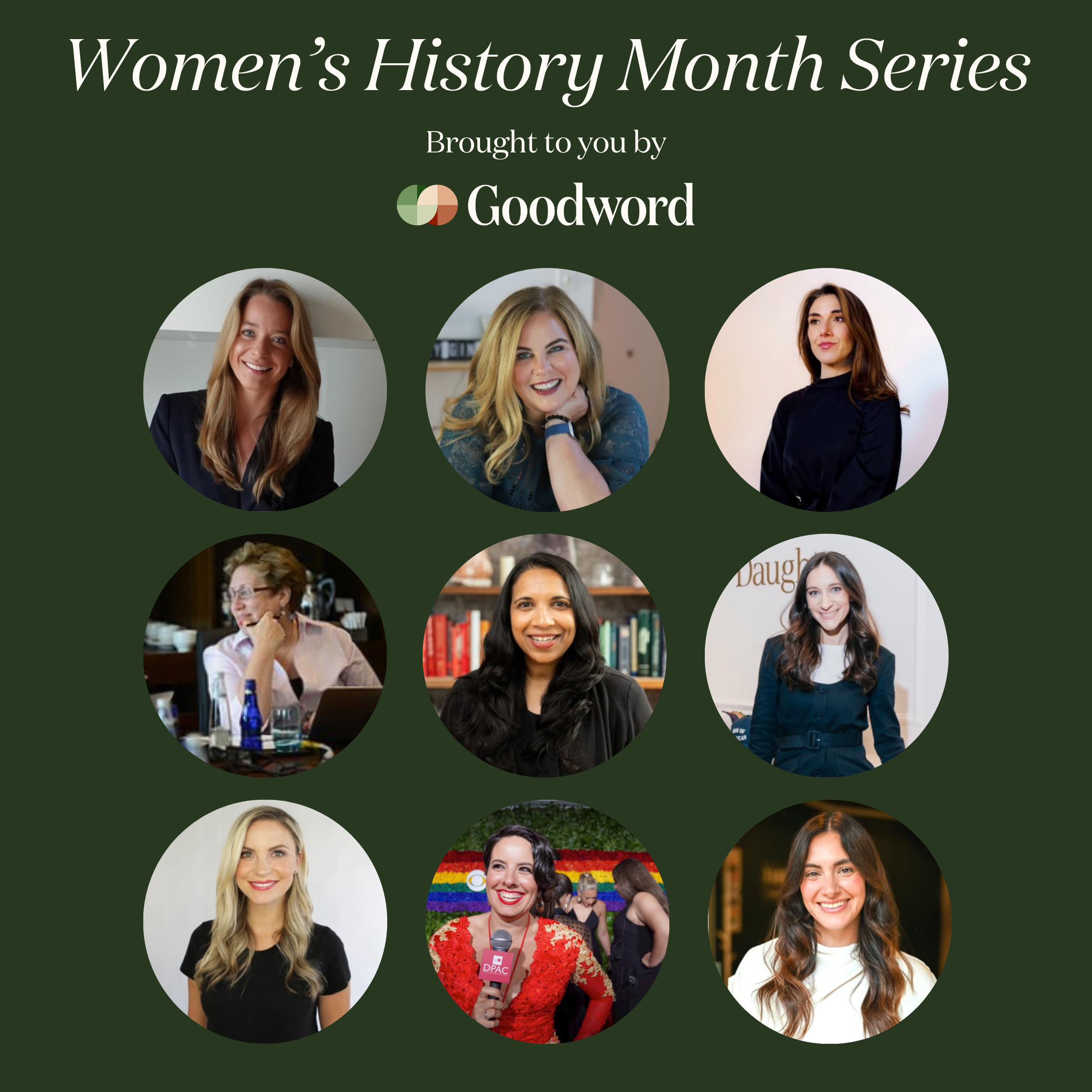
I spent a month in conversation with women across tech, finance, venture, media, and community building, asking them four questions about relationships and networking. Every single person had an immediate answer when it came to the person who changed their career.
It was almost never who you'd predict — not the famous investor, not the mentor they'd been hoping to impress, not the most senior person in the room. More often, it was someone adjacent: a peer, a client, a former colleague, a stranger who had heard their name and passed it on. Someone who saw something and then acted on it, without being asked.
Amy Millman spent more than two decades building Springboard Enterprises, one of the country's longest-running accelerators for women entrepreneurs, and before that, years working in lobbying and policy in Washington. Early in her career, she walked up to the only senior woman at her company and asked if she would be her mentor. She said no.
"She said, you're on your own," Amy told me. "And that was it. She never talked to me again for 10 years."
Amy made a decision at that moment: that was never going to be how she operated. Everything she built afterward — every founder she supported, every door she held open — traced back to that refusal. She should probably thank her.
But the person who actually changed the course of her career came later, through a network she hadn't been part of. A woman Amy didn't know sought her out for a role on a federal commission focused on women's business ownership. Amy had no experience in the space. She hesitated...
"She said, here's the skill set and I think you can actually rise to that occasion. She didn't know me at all but had done her homework, and she said, ‘Here's how this will evolve for you.’"
Thirty-something years later, they're still in touch.
Emily Mueller, founder and partner at Bolden, had a similar experience — though the timing of it still surprises her. Two years before she actually started a company, a board member at the firm where she worked asked her what she wanted to do. She was honest with him.
"He was probably one of the first highly accomplished people in my life who I admitted to that I wanted to start a company," she told me. "And he said, great, I'll be your first check."
He has since become the mentor she calls first — the person who, in her words, always has her career's best interest in mind. The sequence matters: he didn't wait for proof. He believed her before she'd built anything.
Kelsey Nicole Nelson — sports broadcaster, professor at George Washington University, and founder of her own communications firm and podcast network — met her business mentor at a New Year's party in DC. She had aspirations around entrepreneurship. The mentor she found that night had already done it.
What stayed with Kelsey most wasn't the advice she received. It was the consistency of someone who kept showing up: inviting her into rooms, making introductions, sending contacts when she couldn't be there in person. "Not only am I going to be in the room," she said, describing what that mentorship gave her, "I'm going to be seen in the room. And that means a lot to me."
Being in the room versus being seen in it — for many of the women I spoke with, that gap is where professional sponsorship either happens or doesn't.
Amanda Baudier, founder of becoming collective, spent years as a partner at Tao Group before deciding to pivot into wellness. However impressive her resume was in one world, it wasn't translating into another — and she knew it.
It was her husband who got her in the door. He had done consulting work for the founder of Sakara Life, and made one phone call.
"She blocked 15 minutes for me, and we ended up talking for 90 minutes," Amanda said. "I don't think if I had submitted a resume it would have gone further. It was that, hey — my wife's the badass. You should talk to her."
Amanda became VP at Sakara for nearly four years. One warm introduction, because someone who knew her well vouched for her to someone who didn't know her at all.
Taylor Zansberg, a connector and community builder in New York, was nannying for a man named Jack Meyer while aggressively applying for jobs in the city. He kept pushing her to apply for a role in Durham, North Carolina. She kept saying no.
"He kept pushing me for like three months. And I was like, you know what, what's one more job application? So I applied, I ended up getting that job, and I moved to Durham, and that changed the whole trajectory of my life and career."
What she didn't realize at the time was that she had been auditioning throughout their time together. He saw how she operated, how she got things done, and he vouched for her when it mattered. "You never know when you're auditioning for your next thing," she said — and in her case, that turned out to be the whole point.
Lilli Donahue, founder of What If Legal, came from hospitality when she walked into her interview at Capital One. Her resume wasn't what landed her the job. Her boss, Mason Young, made a call.
"He took a total risk on me," she said. "I came from the hospitality industry and my resume definitely wasn't the profile that would have gotten me the job I got."
What followed wasn't just an open door. He helped her navigate the organization, pointed her toward areas she never would have found on her own, and sponsored her next move within the company. "It's always kismet," she said, "when you meet someone who's going to not just open the door for you, but break down the entire wall."
Katie Dunn spent most of her professional life in rooms that were largely male. She'd never really networked with other women — the men were the ones running things, and that was where she'd focused. A close friend, someone she'd known for more than thirty years, changed that with a single ask: apply to the Yale Women on Boards program with me. Katie said yes. "They really taught me how to network and how much opportunity there is out there besides just what I was doing at the time," she told me. "That was a very pivotal moment." That program opened into other communities, other rooms, other relationships — a whole network that hadn't existed for her before, because one person decided to bring her along, and she said yes.
Pam Kavalam wrote a complaint email to ClassPass in 2017. She cared about the service and wanted to give feedback — she was an academic advisor at NYU's policy school at the time, teaching exercise classes on the side. A product manager named Jeff Novich wrote back, invited her to volunteer on a new studio program, and three months later referred her for a full-time role when she asked. That was her entry into tech, and she's been building there for nearly a decade.
"You never know," she said. "Write a nice complaint email. It could get you somewhere."
For Jaclyn Pascocello, co-founder of Fabrik, the person who changed her career was someone she had never met. A woman named Christine — who knew Jaclyn only through the restaurant industry, only by reputation — brought up her name in a conversation with the founder of Spacious, a startup that would go on to transform unused office space into a coworking network before being acquired by WeWork. He was looking for someone to build it with him.
"She had never actually met me," Jaclyn told me. "But she felt confident enough to bring my name up in a room I wasn't in."
Jaclyn went on to build Spacious from zero to acquisition, then two more companies after that. "That changed the whole course of my life. And she didn't have to do it."
Rachel Johnson, co-founder and managing partner of J&O Law,a boutique firm that serves as outside general counsel to emerging and high-growth companies, has built a practice on a simple conviction: just reach out. She cold-DM'd Peloton while writing her Substack — no warm intro, no mutual connection — and they ended up sponsoring a trip. "You just never know what can come out of a reach out," she told me. The Outback Steakhouse hostess who became her co-founder three decades later would probably agree.
What runs through all of these is simpler than any framework: someone decided, without being asked, to use what they had on behalf of someone else. A phone call, a referral, a name mentioned in a room. It costs almost nothing, and for the person on the other side of it, it can be the hinge the whole story turns on. Every woman I spoke with can name that person instantly. The question worth sitting with is: are you doing the same for someone else?
This post is part of Goodword's Women's History Month series. The right connection changes everything — Goodword helps you stay close to yours. Start your free trial →

.svg)